Weekly DeFi Digest: Protocol Upgrades, Capital Flows, and Key Events — Week 10, 2026
Week 10 DeFi digest covering TVL resilience, Uniswap fees, Aave governance crisis, Ethereum Glamsterdam, Solana Alpenglow, and critical security alerts.

Week 10 of 2026 marks a pivotal moment for decentralized finance. Against a backdrop of renewed capital inflows and institutional participation, the sector faces critical governance stress-tests, transformative infrastructure upgrades, and persistent security challenges. This DeFi weekly digest examines the themes shaping markets, protocols, and investor behavior.
Capital Flows Strengthen: DeFi TVL Resilience Amid Market Volatility
DeFi demonstrated structural resilience during a sharp crypto selloff that pushed total TVL from approximately $120 billion to $105 billion early in February. Rather than signaling weakness, this contraction reflected asset price compression rather than user exits. CoinDesk's analysis notes that Ethereum DeFi holdings actually increased by 1.6 million ETH during the downturn, a strong signal of continued builder and whale confidence.
Liquidation exposure remained minimal, underscoring improved collateralization across the ecosystem. Only $53 million in positions faced liquidation risk within a 20% move from current prices, compared to $340 million during a comparable 2025 pressure event. This suggests that protocols and users have significantly de-risked leverage profiles since the prior cycle.
Stablecoin supply reached $269.65 billion, with net inflows of $741.6 million led by USDT, which recorded $1.05 billion in new mints. Meanwhile, Bitcoin ETF inflows reinforced institutional appetite: in a four-day window, $385.9 million Bitcoin ETFs recorded + in net inflows, with BlackRock's IBIT contributing $274.6 million and Fidelity FBTC adding $106.4 million. These flows confirm that the macro environment is shifting toward risk-on positioning.
Governance Under Pressure: Uniswap Fee Activation and Aave's Leadership Crisis
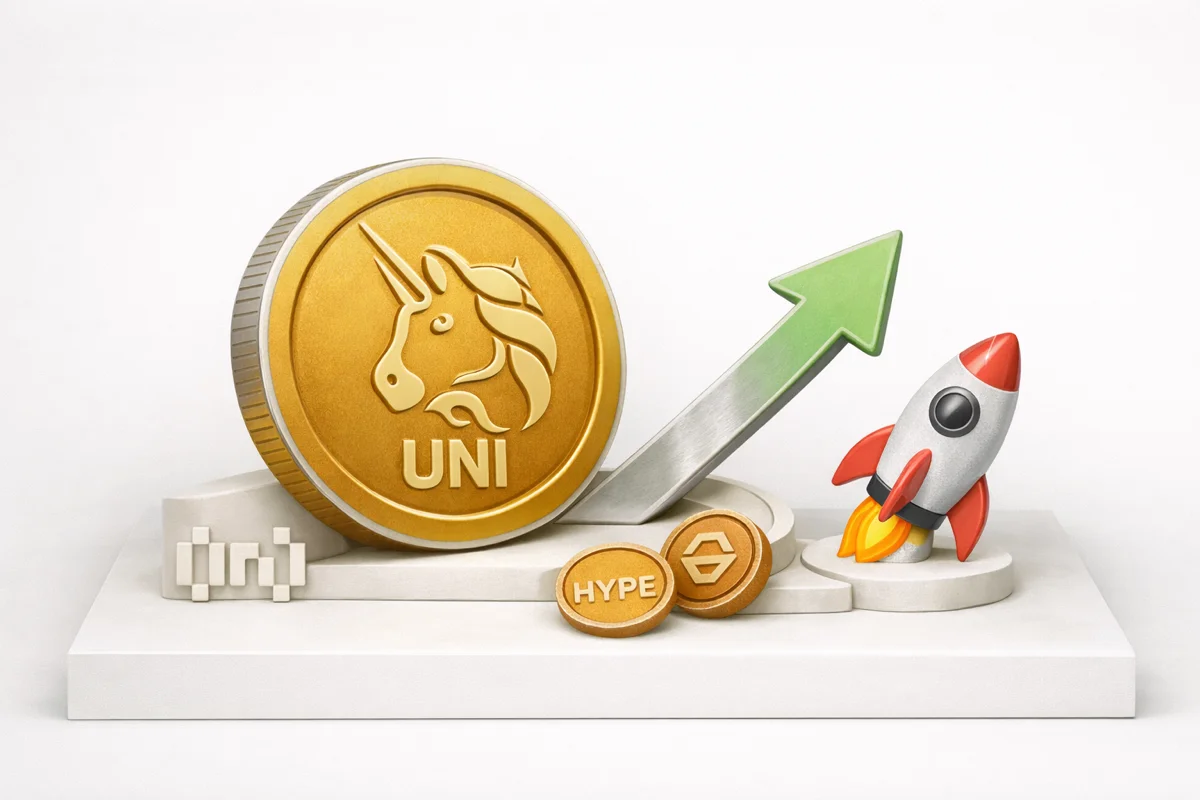
Two governance narratives dominated the week. At Uniswap, the DAO entered its final governance vote on protocol fee activation on February 23—a landmark tokenomics shift. The proposed mechanism would direct 0.05% of V2 pool trades and a fraction of V3 liquidity provider fees to the DAO treasury, marking the first time UNI holders would capture direct protocol revenue.
The Aave situation is far more contentious. Aave Labs unilaterally redirected the frontend swap aggregator from ParaSwap to CoW Swap without DAO approval, effectively shifting fee capture to the company while bypassing governance oversight. The response was swift: BGD Labs, Aave's core development team, announced its April 2026 exit, citing governance tensions and the protocol's pivot toward V4. The AAVE token fell approximately 40% from recent highs, reflecting market concern over whether centralized development control can coexist with distributed governance ideals.
These two events illustrate a recurring tension in DeFi: the challenge of balancing concentrated technical expertise with distributed token ownership over revenue capture and protocol direction.
Protocol Upgrades: Ethereum Glamsterdam and Solana Alpenglow Reshape L1 Landscape
Two major L1 upgrades will reshape the competitive landscape through mid-2026. Ethereum's Glamsterdam upgrade, targeted for H1 2026, enshrines Proposer-Builder Separation at the protocol level via EIP-7732. This move eliminates a key source of friction in MEV distribution and validator economics. Additionally, Block-Level Access Lists (EIP-7928) enable deterministic parallel execution, while gas repricing EIPs reduce state bloat concerns that have haunted the network since the Shanghai upgrade.
On the Solana side, the Alpenglow consensus rewrite represents a more radical architecture overhaul. 98.27% Backed by of staked SOL, Alpenglow retires Proof of History and TowerBFT in favor of Votor (consensus) and Rotor (data propagation) components. The performance gains are substantial: block finality compresses from 12.8 seconds to sub-150 milliseconds. Both upgrades are slated for Q1–H1 2026 mainnet deployment and will likely influence capital allocation between ecosystems through the second quarter.
Layer 2 Rotation: Base Overtakes Arbitrum Amid Capital Shifts
The L2 ecosystem continues to consolidate around a few dominant platforms. Base has surpassed Arbitrum to lead L2 DeFi TVL — commanding roughly 46.6% of L2 market share by some estimates — driven by Coinbase's distribution advantage and integrated fiat-bridge infrastructure. Arbitrum reportedly holds roughly 31% of L2 share, yet reportedly faced $56.9 million in net outflows on February 20, pushing the ARB token toward all-time lows.
Despite these capital outflows, on-chain activity on Arbitrum remained steady, indicating capital rotation rather than ecosystem abandonment. Looking ahead, 2026 roadmaps show BNB Chain pursuing sub-second finality at 20,000 transactions per second, while Polygon's AggLayer enables shared cross-chain liquidity, signaling that L2 competition will intensify around performance and interoperability.
Security Alert: Bridge Exploits and Oracle Manipulation Patterns Reemerge
Week 10 witnessed a significant exploit underscoring persistent vulnerabilities in bridge architecture. $3 million CrossCurve lost approximately on February 2 via a spoofed cross-chain message attack that exploited ReceiverAxelar contract flaws. Attackers bypassed gateway validation, triggering unauthorized PortalV2 unlocks across multiple networks.
In parallel, a serial oracle-manipulator has reportedly stolen approximately $3.5 million across at least five lending protocol incidents, exploiting misconfigured Chainlink price feeds. BlockSec reportedly flagged this pattern as potentially involving insider timing information, suggesting that oracle manipulation may require sophisticated coordination.
These incidents reinforce a critical insight: bridge architecture and oracle configuration remain DeFi's highest-surface-area attack vectors as the ecosystem enters Q2 2026. Standardization and auditing of these subsystems should be treated as urgent priorities.
Week 10 Takeaway: Resilience, Governance Tests, and Infrastructure Maturity
Week 10 crystallizes five key themes for DeFi investors and protocol participants:
Structural Resilience. DeFi demonstrated the durability to absorb a 12% TVL contraction while maintaining healthy liquidation ratios and attracting institutional capital—a stark contrast to prior cycles.
Governance Stress-Tests. The Uniswap fee activation and Aave centralization disputes surface a recurring tension between concentrated expertise and distributed ownership. Both outcomes will establish precedent for future DAO decision-making.
Infrastructure Maturity. Ethereum Glamsterdam and Solana Alpenglow represent a coming wave of L1 upgrades that will compete on performance, UX, and MEV redistribution mechanisms.
L2 Consolidation. Base's ascendance reflects the power of integrated platform economics. Arbitrum's resilience despite capital outflows suggests a stable, if secondary, position in the L2 hierarchy.
Security Remains a Bottleneck. Bridge and oracle exploits demand urgent standardization and deeper auditing practices before the next phase of scaling and adoption.
Looking Forward
The DeFi weekly digest landscape continues to evolve at a rapid pace. Governance decisions at Uniswap and Aave will reverberate through the week, while the technical roadmaps of Ethereum and Solana will shape capital flows through Q2. Monitoring these developments—and remaining vigilant about emerging security vectors—is essential for any participant in decentralized finance.
Stay informed. Track governance decisions. Monitor bridge and oracle configurations. The DeFi ecosystem is maturing, but its attack surface remains unforgiving.