South Korea Cracks Down on Crypto Exchange Monopolies: 15-20% Ownership Cap in Phase 2 Digital Asset Act
South Korea proposes capping crypto exchange ownership at 15-20% under its Phase 2 Digital Asset Act, forcing Upbit and Bithumb into governance restructuring.
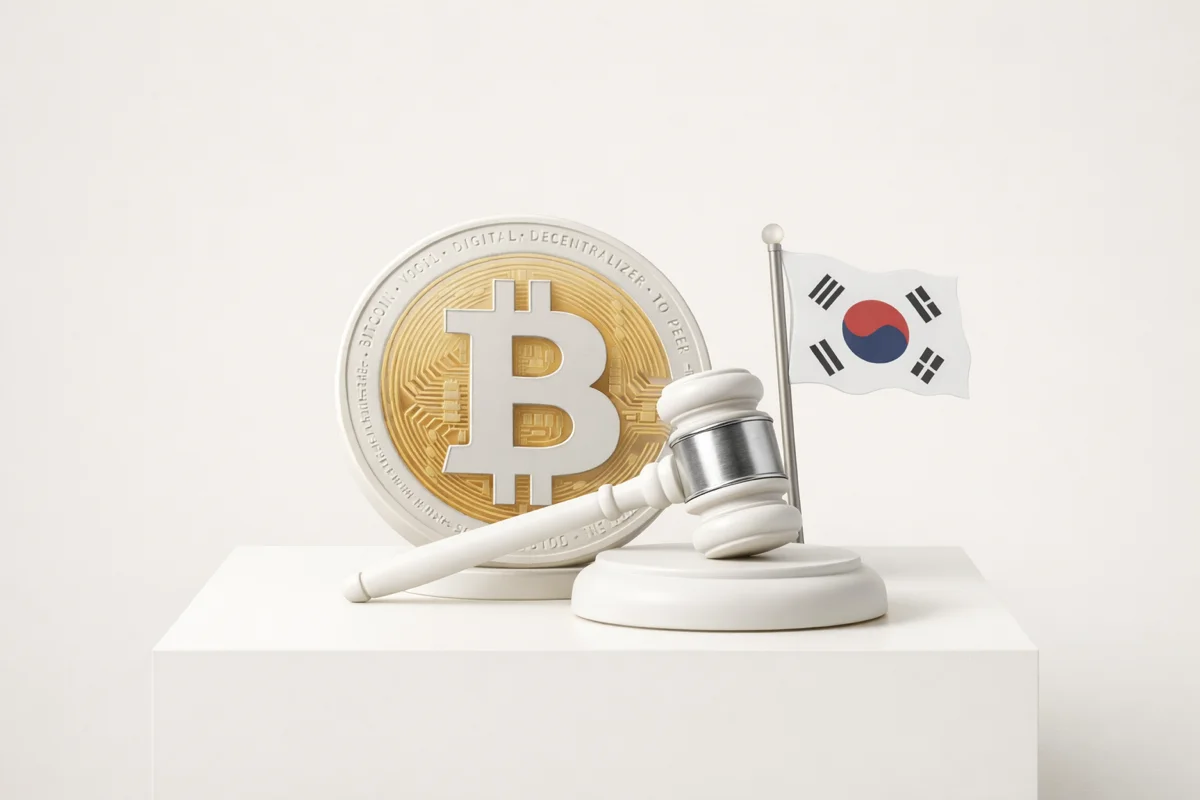
South Korea is preparing one of the most consequential structural interventions in global crypto exchange governance. The country's ruling Democratic Party and Financial Services Commission (FSC) have finalized a framework to cap individual and corporate ownership of major cryptocurrency exchanges at 15–20% of total equity, with potential exceptions allowing stakes up to 34% under FSC supervision. Embedded in the Phase 2 Digital Asset Basic Act, this measure directly targets the concentrated ownership structures of Upbit and Bithumb, which together control roughly 90% of the Korean crypto market.
The Ownership Cap Framework: 15-20% With Exceptions to 34%
After months of contentious negotiations, South Korea's ruling party digital asset task force and the FSC have settled on an ownership ceiling framework. The law itself will set the major shareholder ownership cap at 20%, while enforcement decrees could allow exceptions of up to 34% within parameters determined by the FSC on a case-by-case basis.
This dual-layer approach — a legislative ceiling with regulatory flexibility — mirrors frameworks used in traditional financial services, where bank ownership caps operate similarly. The cap targets not just founders but any major shareholder whose equity stake exceeds the threshold, creating a structural requirement for dispersed ownership across all major Korean crypto exchanges.
The provision is the most consequential element of the Phase 2 legislation, which also encompasses stablecoin issuance rules and bank-led stablecoin frameworks.
Impact on Upbit and Bithumb: The 90% Market Share Duopoly
The ownership cap directly targets the concentrated governance structures of South Korea's two dominant exchanges. Upbit and Bithumb together control approximately 90% of the country's crypto trading volume.
Dunamu, Upbit's parent company, is chaired by Song Chi-hyung, who currently holds an estimated 25–28% ownership stake. Under the 20% cap, Song would need to divest approximately 5–10% of his equity — a significant governance event for the platform.
The legislation provides a three-year grace period for major exchanges (Upbit and Bithumb) beginning from the date of law enactment. Smaller exchanges — including Coinone, Korbit, and Gopax — receive an additional three-year buffer, effectively granting them six years to achieve compliance. This tiered timeline reflects the regulator's recognition that different exchanges face different restructuring challenges.
Timeline: Phase 2 Digital Asset Act Path to Enactment
The ownership cap is embedded in the Digital Asset Basic Act Phase 2, which is expected to go before parliament for review and finalization in early 2026. The FSC is targeting completion of the legislation by Q1 2026.
However, the legislative path has already encountered delays. The Phase 1 legislation, which established basic licensing and operational requirements for crypto exchanges, faced significant delays in 2025 due to disagreements between the FSC and the Bank of Korea over stablecoin regulation. These unresolved tensions carried into Phase 2 discussions, creating uncertainty about the final enactment timeline.
The three-year compliance clock for Upbit and Bithumb does not start until the law is formally enacted, meaning the actual divestiture deadline could extend to 2029 or later depending on legislative timing.
Industry Pushback and Capital Flight Concerns
The proposed ownership caps have generated significant industry opposition. Exchange operators and industry associations are actively pushing back against what they characterize as forced divestiture that could undermine the competitiveness of Korea's crypto industry.
Critics argue that the ownership caps could push crypto innovation offshore, with Singapore, Dubai, and Hong Kong positioned as attractive alternative jurisdictions. As one analysis noted, the concern is that "the next Dunamu might be born in Singapore, not Seoul" — a reference to the risk that entrepreneurs who build successful platforms will be forced to divest, reducing incentives for domestic crypto entrepreneurship.
The pushback highlights a fundamental tension in crypto regulation: the desire to prevent market concentration versus the need to maintain competitive advantages in a globally mobile industry. Korea's experience may serve as a case study for other jurisdictions considering similar measures.
The Stablecoin Dimension: Bank-Led Framework and Regulatory Deadlock
Phase 2 encompasses more than ownership caps. The legislation also establishes rules for stablecoin issuance, including a bank-led framework that would give traditional financial institutions a central role in Korea's stablecoin ecosystem.
This stablecoin provision has been a primary source of legislative delay. The FSC and Bank of Korea have clashed over control of stablecoin reserves and enforcement responsibilities, creating a regulatory turf war that stalled the entire Phase 2 package. The dispute reflects a broader global challenge: defining the boundary between traditional banking oversight and emerging digital asset regulation.
The bank-led model, if enacted, would position Korean stablecoin issuance under traditional financial supervision — a more conservative approach than the U.S. framework, where non-bank issuers currently operate stablecoins with significant market share.
Implications for Global Crypto Market Structure
South Korea is one of the world's largest cryptocurrency trading markets, and its regulatory decisions carry outsized influence on global exchange governance norms. The ownership cap framework could serve as a template for other jurisdictions seeking to address market concentration in crypto exchange markets.
The forced governance restructuring of exchanges controlling 90% of a national market is without precedent in crypto regulation. If successful, it could encourage regulators in Japan, the EU, and other markets to consider similar measures. If it drives capital and talent offshore, it could serve as a cautionary example of over-regulation.
For global crypto investors, the key monitoring points are the parliamentary timeline for Phase 2 enactment, the specific FSC enforcement decrees defining the 34% exception criteria, and any early divestiture announcements from Dunamu or other major shareholders. The outcome of Korea's ownership cap experiment will influence regulatory approaches to exchange governance worldwide.
Sources
- Korea's 20% Crypto Exchange Ownership Cap Sets Up Market Restructuring — KoreaTechDesk
- South Korea Sets 20% Ownership Cap for Upbit and Bithumb — Crypto Times
- Korea to Cap Crypto Exchange Stakes, Set Bank-Led Stablecoin Rules — Seoul Economic Daily
- South Korea Moves to Break Up Crypto Exchange Ownership — Coindoo
- Why the Next Dunamu Might Be Born in Singapore — KoreaTechDesk
- South Korea Proposes Crypto Exchange Ownership Caps — BeInCrypto