Fee Switch ROI: Why Uniswap's $600M Fee Shift Changes DeFi Valuations
Uniswap fee switch generated $600M annualized revenue, transforming DeFi valuations. Fee-switch ROI analysis across Aave, Lido, and MakerDAO with P/E frameworks.

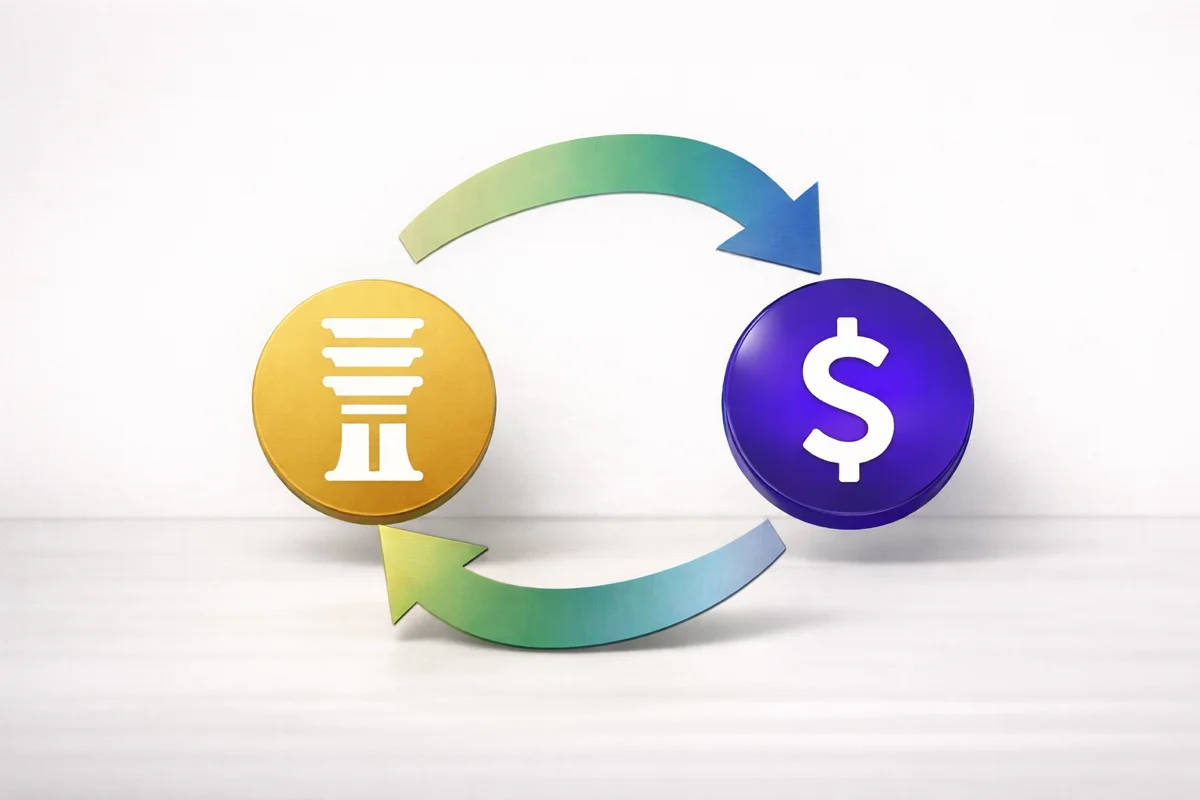
DeFi has reached an inflection point. After years of governance-token speculation, the industry's leading protocols are implementing the DeFi fee switch ROI mechanism—transforming tokens from voting tools into genuine value-accruing assets tied directly to protocol revenues. This shift represents the most fundamental change in how DeFi investors should evaluate tokens since the liquidity mining era.
Uniswap's UNIfication proposal, which passed governance with overwhelming support in December 2025, exemplifies this transition. With 125 million UNI votes in favor (99.9% approval, just 742 against), the protocol moved from a governance-only token design to one where capital capture and deflationary mechanics drive economic returns. The message is clear: DeFi investors can now assess tokens using the same cash-flow frameworks traditionally applied to equities—fundamentally altering the investment thesis for fee-generating protocols.
The Fee Switch: From Governance Tokens to Value-Accruing Assets
Uniswap's transformation began with the UNIfication proposal, a watershed moment in protocol economics. The vote passed decisively in December 2025, marking the first major step toward protocol-owned revenue capture in DeFi's most-traded decentralized exchange.
The mechanics are straightforward but consequential. UNI transitioned from a governance-only token—where holding conveys voting power but no direct economic benefit—to a value-accruing asset where protocol revenues flow back to token holders through systematic deflationary pressure. This restructuring addresses a fundamental investor complaint: why should a token capturing $600 million in annual fees provide no direct return to holders?
The shift carries broader implications for DeFi tokenomics. By aligning fee capture with token holder returns, Uniswap sets a new precedent. Protocols that fail to implement similar mechanisms face credibility risks with institutional and informed retail investors who increasingly demand earnings-based valuations rather than speculative governance narratives. The UNIfication vote demonstrated that token holders will overwhelmingly support mechanisms that return value directly to the community.
Understanding Uniswap's Fee Mechanics and Burn Architecture
To understand the ROI potential, you need to grasp Uniswap's revised fee structure and how those revenues flow to token holders.
The mechanics differ between Uniswap v2 and v3 pools:
- v2 pools: Liquidity providers receive a 0.25% swap fee, while the protocol captures an additional 0.05%.
- v3 pools: The protocol captures between 1/6 and 1/4 of LP fees depending on the pool's fee tier, creating variable protocol revenue based on pool composition.
Critically, all captured protocol fees are routed directly to an on-chain burn mechanism via the TokenJar and Firepit contracts. This automated burn reduces UNI supply over time, creating deflationary pressure that benefits remaining holders.
Uniswap v4 introduces even more flexibility: custom fees ranging from 0% to 100%, replacing the fixed fee tiers of v3. This allows liquidity providers and the protocol to optimize fee structures for specific trading pairs and market conditions.
The burn architecture extends beyond spot trading. Unichain, Uniswap's sequencer network, generates sequencer revenues. These revenues—after paying L1 data availability costs and Optimism's 15% share—are also directed into the burn mechanism. This multi-revenue-stream approach creates sustained deflationary pressure across the protocol's entire ecosystem.
The 100M UNI Retroactive Burn and Market Implications
The most dramatic manifestation of this value-capture transition was the retroactive 100 million UNI burn executed on December 28, 2025, valued at approximately $590–600 million.
This burn compensates UNI holders retroactively for uncaptured protocol revenues since Uniswap's 2018 launch. Representing approximately 10% of UNI's total token supply, the burn was a significant deflationary event that acknowledged years of value left on the table. The governance community effectively voted to sacrifice treasury reserves to signal credibility: protocols do capture value for holders, and we will act to return it retroactively.
The forward-looking implications are equally compelling. Uniswap generates approximately $600 million annually in fees across $2 billion in daily trading volume. Under the fee-switch regime, the protocol's ongoing take-rate could generate $100–150 million per year in deflationary pressure, equivalent to roughly 2.5% annual supply reduction.
For investors, this creates a calculable return mechanism. Unlike governance-only tokens where value capture remains speculative, UNI holders can now model expected annual supply reduction and its compounding effect on per-token value.
From Speculation to Fundamentals: Price-to-Fees as a Valuation Framework
The fee-switch era enables a fundamental shift in DeFi valuation methodology. Fee-generating protocols can now be analyzed using price-to-fees (P/F) and price-to-sales (P/S) ratios—frameworks borrowed from traditional equity analysis.
Token Terminal, a leading on-chain analytics platform, already provides P/F and P/S metrics across hundreds of protocols, enabling investors to screen DeFi assets by earnings yield just as they would equities. This is transformative: instead of debating whether a token has "utility," investors can now compare the cash-flow multiples of Uniswap, Aave, and other revenue-generating protocols against each other and against traditional financial assets.
This framework shifts due diligence from speculation to fundamentals. A token trading at a 10x price-to-fees multiple is now directly comparable to another at 15x P/F, enabling rational capital allocation based on valuation rather than narrative momentum. The shift aligns DeFi investing with the rigorous equity analysis that institutional capital demands.
Aave and the Broader Protocol Revenue Ecosystem
Uniswap is not alone in recognizing the power of fee-based value accrual. Aave, the leading lending protocol, exemplifies how multiple protocols are implementing distinct but complementary approaches.
Aave captures 10% of all borrower interest, while lenders receive 90%. This revenue stream generates substantial annual income, which the protocol routes into regular AAVE buybacks and ecosystem reserves under its 2025 framework.
A more radical proposal within Aave's governance would transfer 100% of protocol revenue to the DAO in exchange for formalized operational funding. This structure, more akin to a publicly-traded company than a traditional startup, would fully align developer and token holder incentives.
Beyond Aave and Uniswap, the broader DeFi ecosystem is experimenting with diverse value-accrual architectures. Ethena, for instance, converts protocol fees into direct yield for USDe and sUSDe holders, creating a stablecoin with built-in return mechanisms.
The recovery in DeFi revenues validates the entire thesis. DeFi application revenues reached $600 million in September 2025, nearly double the $340 million low recorded in March. Uniswap, Aave, and Ethena led this rebound, each demonstrating that sustained fee capture and value return drive investor confidence and ecosystem growth.
Key Due Diligence Questions for Fee-Based Protocol Investing
As DeFi transitions to fee-based investing, the critical questions for investors shift. These are the frameworks you should apply when evaluating fee-generating protocols:
What is the protocol's effective take-rate? Understanding the actual percentage of trading or lending volume captured as protocol revenue allows you to model forward cash flows and returns.
Is fee revenue sustainable under competitive pressure? This is essential. According to on-chain market data, Uniswap's DEX market share declined sharply—from approximately 60% in October 2023 to under 15% by late 2025. If a protocol's revenue depends on maintaining market dominance, sustainability is questionable. Revenues that shrink during market competition erode the valuation case.
What regulatory risks accompany on-chain distributions? On-chain burns and buybacks may eventually trigger securities regulation. Automated token distributions that resemble dividends could face legal challenges. Understanding your jurisdiction's regulatory framework is essential before committing capital to protocols implementing aggressive value-return mechanisms.
How durable is the governance consensus maintaining fee parameters? Token holders might vote to lower or eliminate fees during downturns. The sustainability of fee-switch mechanisms depends on ongoing governance consensus—a potential weakness compared to immutable, investor-grade financial structures.
Does the protocol's value-accrual architecture align founder and token holder incentives? Protocols where developers retain separate tokens or treasury control may prioritize growth over value return. Structures fully aligning incentives—like Aave's potential 100% revenue transfer—strengthen credibility.
Conclusion: DeFi's Transition to Fundamental Asset Classes
The fee-switch era marks DeFi's maturation from speculative governance tokens to cash-flow-based investing. Uniswap's UNIfication vote in December 2025 and the subsequent $590–600 million retroactive burn crystallized what many believed inevitable: protocols that generate revenues should return value to token holders.
The recovery in protocol revenues—rising 76% from March to September 2025—validates the investment thesis. DeFi protocols are not governance experiments; they are financial systems generating measurable, on-chain cash flows.
Yet the transition remains incomplete. Regulatory clarity remains a major unknown. Will on-chain distributions face securities scrutiny? How will governance bodies handle fee decisions during downturns? And what happens if competitive pressures erode the revenue bases that justify high P/F multiples?
For sophisticated DeFi investors, the framework is now clear. Apply price-to-fees and price-to-sales analysis to screen protocols by earnings yield. Evaluate revenue durability and competitive positioning rigorously. Understand the regulatory environment in your jurisdiction. And demand that governance structures align founder and token holder incentives.
The fee switch represents DeFi's transition from narrative-driven speculation to fundamental, data-driven asset analysis. The investors who master this new framework are better positioned to evaluate and capture returns. Those who cling to governance-utility narratives will increasingly find themselves on the wrong side of valuations.
DeFi has grown up. Invest accordingly.
Sources
- UNIfication — Uniswap's Fee Switch Proposal
- Uniswap Protocol Fees — Official Documentation
- UNIfication Proposal — Uniswap Governance Forum
- Uniswap's UNI Token Burn, Protocol Fee 'UNIfication' Proposal Backed Overwhelmingly by Voters
- Uniswap Finally Turns the Fee Switch
- Uniswap, Aave Lead DeFi's Fee Rebound to $600M as Buybacks Take Center Stage
- Aave Protocol Financial Overview — Token Terminal