Ethereum Pectra Upgrade: What EIP-7251 and Account Abstraction Mean for DeFi Users and Protocols
Ethereum's Pectra upgrade delivers account abstraction, validator consolidation, and Layer-2 scaling. Understand EIP-7251, EIP-7702, and practical implications for DeFi users and staking.
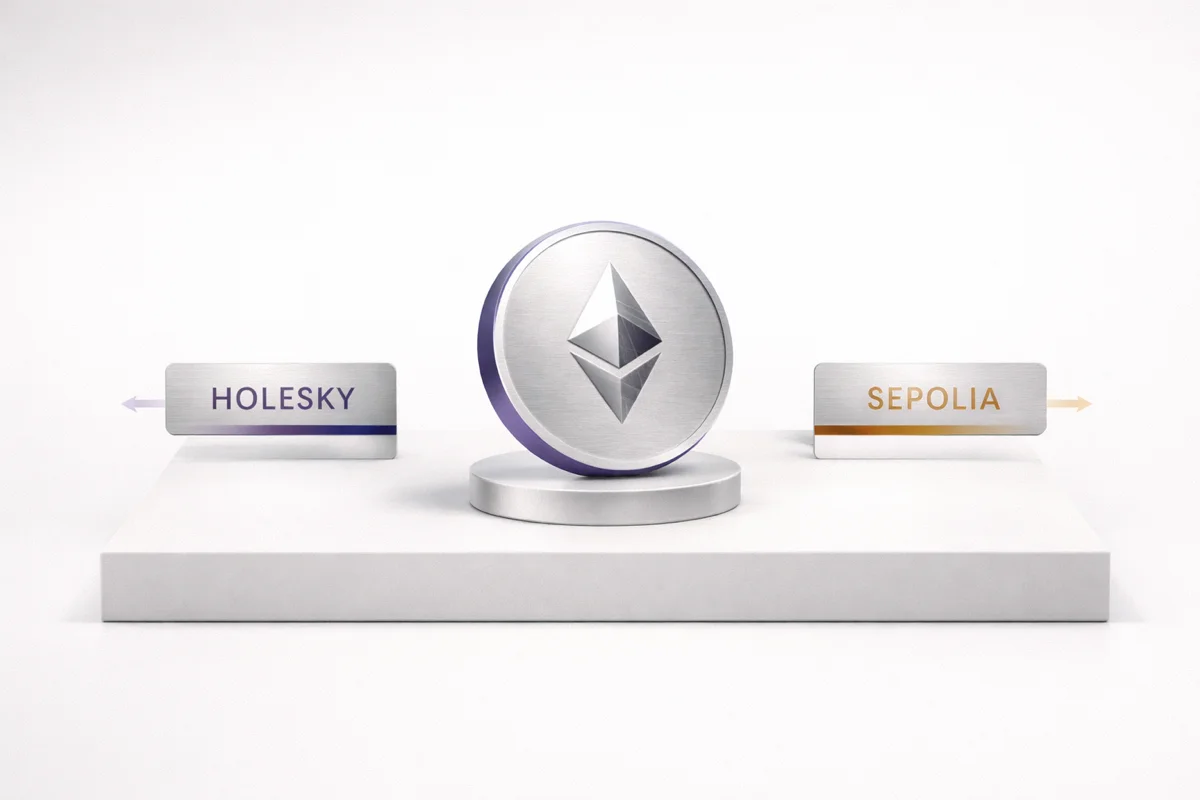
On May 7, 2025, the Ethereum network activated the Pectra upgrade, marking a watershed moment for the ecosystem. This comprehensive enhancement combines the Prague execution layer hard fork with the Electra consensus layer upgrade, delivering fundamental improvements across three critical dimensions: account functionality for everyday users, staking infrastructure for node operators, and Layer-2 scalability for DeFi applications. Unlike previous upgrades focused on a single axis, Pectra addresses fragmented pain points simultaneously, positioning Ethereum to compete on user experience while maintaining technical rigor.
Understanding Pectra's practical impact requires examining each pillar in detail. For DeFi participants, the most visible change arrives through account abstraction. For stakers and protocol operators, validator consolidation fundamentally reshapes economics. For Layer-2 users, blob throughput expansion directly cuts transaction costs. This article breaks down each component and explains what to do next.
What Is the Ethereum Pectra Upgrade?
Pectra activated at epoch 364032 (10:05:11 UTC) on May 7, 2025, representing the most comprehensive Ethereum enhancement since the Merge. The upgrade bundles improvements across three dimensions: account functionality through EIP-7702, staking infrastructure via EIP-7251 and supporting EIPs, and Layer-2 scalability through EIP-7691.
A critical point: Pectra does not change tokenomics or minimum validator thresholds. Existing ETH holders require no immediate action to benefit from the upgrade. The changes are backward-compatible architectural enhancements that strengthen the network without disruption.
Account Abstraction for EOAs: How EIP-7702 Simplifies DeFi
EIP-7702 introduces a paradigm shift in how externally owned accounts (EOAs) interact with DeFi. Rather than forcing users to migrate to entirely new smart contract wallets, EIP-7702 allows existing wallets to delegate control to smart contract code within a single transaction.
The practical benefits unfold across several use cases:
Batch transactions: Users can now approve tokens and execute swaps in a single transaction instead of fragmenting actions across multiple transactions. This reduces friction and block space usage while improving user experience.
Gas sponsorship: DeFi protocols can cover transaction fees on behalf of users, lowering barriers to entry and enabling cost-effective onboarding campaigns. A user can interact with a protocol without holding ETH for gas.
Alternative authentication: EIP-7702 supports passkey-based sign-in and account recovery mechanisms without requiring users to transfer assets to new addresses. This removes a significant source of friction that has historically limited DeFi adoption and positions Ethereum wallets to compete with the streamlined UX available on Solana and other chains.
Validator Consolidation: How EIP-7251 Transforms Ethereum Staking
EIP-7251 is the structural change that transforms Ethereum staking economics. The EIP raises the validator effective balance ceiling from 32 ETH to 2,048 ETH while maintaining the 32 ETH minimum activation threshold.
This seemingly technical change has profound implications:
Operator consolidation: Large staking operators and liquid staking protocols can consolidate hundreds of validators into fewer nodes, directly reducing operational costs. Previously, a protocol running 100 validators required managing 100 separate consensus participants. Post-Pectra, those 100 validators can be consolidated into significantly fewer operational units.
Network efficiency gains: Reducing the number of active validators decreases network message overhead by approximately 40%, enabling faster finality without compromising security. This improvement emerges naturally from fewer participants publishing fewer messages.
Native reward compounding: Validators now automatically reinvest earnings up to the 2,048 ETH cap without manual intervention. This is a substantial usability improvement; previously, staking rewards required manual claiming and restaking.
Execution-layer features: EIP-7251 introduces in-protocol validator consolidation and execution-layer partial withdrawals, simplifying operational workflows and enabling more sophisticated withdrawal strategies for both solo stakers and protocols.
Complementary Staking Improvements: EIP-6110, EIP-7002, and EIP-7549
Pectra bundles four complementary EIPs that collectively enhance staking efficiency and security:
EIP-6110 accelerates validator activation from approximately 12 hours to just 13 minutes by moving deposit processing onto the execution layer. This dramatic acceleration means staked capital becomes operational vastly faster, improving capital efficiency for staking protocols.
EIP-7002 enables direct validator exits, allowing smart contracts and withdrawal credential owners to trigger exits independently. This enhancement is particularly critical for liquid staking protocols; previously, custodial bottlenecks meant protocols couldn't independently exit validators. EIP-7002 eliminates that friction and enables trust-minimized configurations where protocols exercise greater autonomy.
EIP-7549 reduces signature requirements and block space usage, further improving staking efficiency. Together, these EIPs create a substantially more responsive and efficient staking ecosystem.
Layer-2 Scaling: How EIP-7691 Reduces Transaction Costs
EIP-7691 directly addresses Layer-2 scalability by increasing blob throughput. The EIP raises the target blobs per block from 3 to 6 and the maximum from 6 to 9. This doubles the target daily blob capacity from approximately 5.5GB to 8.15GB.
Real-world impact has been substantial. Post-upgrade data shows rollups increased usage by approximately 20% while fees remained negligible. Starknet reported a 95-100x reduction in Layer-1 costs for state proofs, a dramatic efficiency gain for proof systems.
For DeFi users on Arbitrum, Optimism, Base, and zkSync, the practical benefit is direct: transaction fees have dropped to as low as $0.001 for routine DeFi operations. The blob base fee update mechanism adjusted to remain responsive under the new capacity limits, ensuring pricing remains efficient as usage scales.
Implications for DeFi Protocols and Liquid Staking
Ethereum maintains the largest total value locked (TVL) share in DeFi at approximately $45.7 billion as of April 2025, despite competitive pressure from Solana, Avalanche, and Sui. Pectra strengthens this position across multiple fronts.
For DeFi protocols, EIP-7702 unlocks new product possibilities. Protocols can batch user transactions, implement gas sponsorship for customer acquisition, and offer sophisticated recovery and authentication experiences. Protocol teams should begin integrating EIP-7702 capabilities to differentiate user experience and compete on friction reduction.
For liquid staking protocols, the implications are structural. Native exit mechanics via EIP-7002 enable more trust-minimized designs. Validator consolidation via EIP-7251 directly reduces operational costs, improving margins. Faster validator activation via EIP-6110 means staked capital becomes productive faster, enhancing returns for stakers.
For Layer-2 DeFi, cheaper transactions create a virtuous cycle: lower friction attracts more users, higher volume improves rollup economics, which enables even lower fees. This dynamic directly strengthens Ethereum's competitive moat against other Layer-1 and Layer-2 ecosystems.
What's Next: How to Prepare
Pectra activation does not require immediate action for most ETH holders. However, different stakeholders can take proactive steps to maximize the upgrade's benefits.
For DeFi users: Begin using wallets that support EIP-7702 to batch transactions and access gas sponsorship opportunities. This immediately improves your transaction experience and reduces costs.
For staking providers and liquid staking protocols: Evaluate validator consolidation strategies. Calculate whether consolidating existing validators reduces operational costs sufficiently to justify engineering work. Assess EIP-7002 exit mechanics and design trust-minimized withdrawal flows.
For protocol developers: Begin integrating EIP-7702 support into UI and contract design. This positions your protocol to compete on user experience as EIP-7702-enabled wallets become mainstream.
For Layer-2 users: No action required. Reduced transaction costs on rollups will materialize automatically as Layer-2 sequencers adjust to the expanded blob capacity and fee dynamics.
Pectra represents a rare convergence: an upgrade that simultaneously addresses staker economics, user experience, and Layer-2 affordability. By removing friction across the DeFi stack, Pectra strengthens Ethereum's structural advantages in capital markets and positions the network to maintain dominance in decentralized finance through 2026 and beyond.