How to Earn 10-20% Yield Safely Across Ethereum, Arbitrum, Base, and Solana
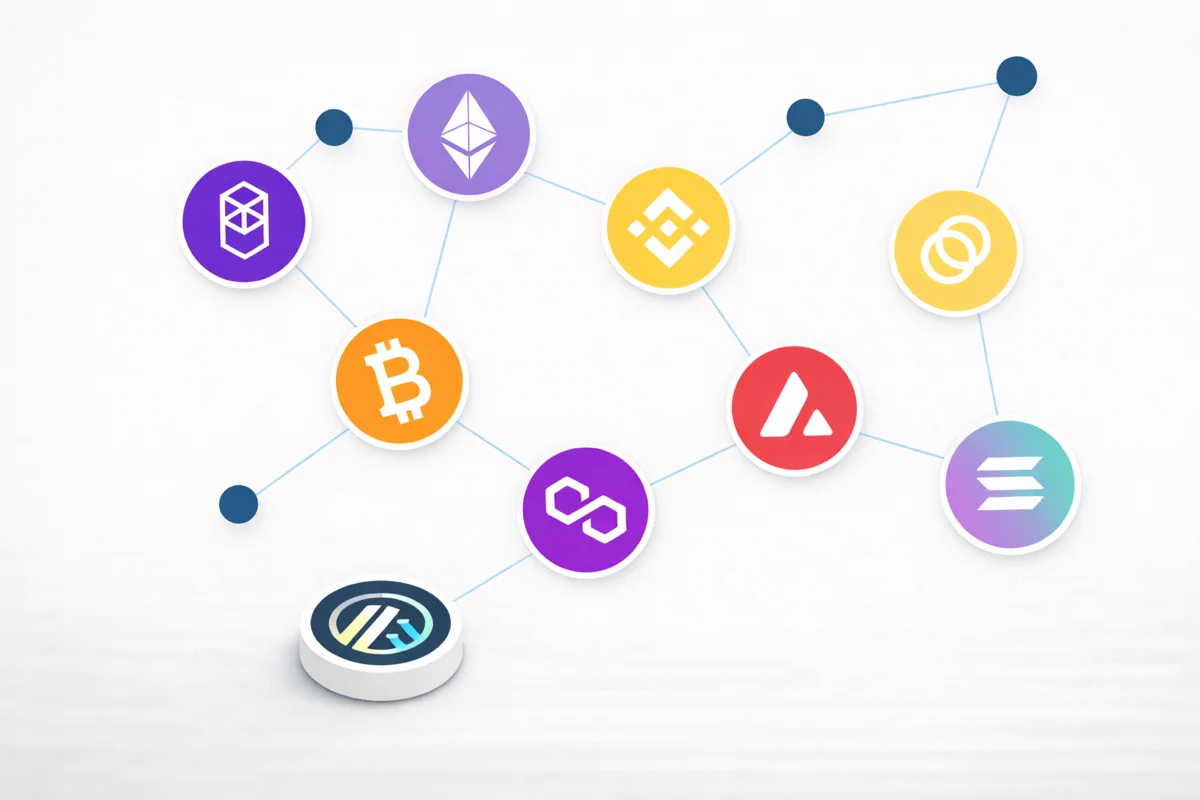
As decentralized finance matures in 2026, yield-seeking investors face a fragmented ecosystem of opportunities. Rather than concentrating capital within a single blockchain, sophisticated DeFi participants are adopting cross-chain yield strategies to maximize returns while diversifying protocol risk. This guide explores how to identify yield opportunities across four major ecosystems—Ethereum, Arbitrum, Base, and Solana—and manage the inherent risks of moving assets between chains.
Why Cross-Chain Yield Matters in 2026
The DeFi landscape has expanded dramatically. According to DefiLlama, total value locked across all decentralized protocols now exceeds $96 billion, distributed across dozens of blockchain networks. Among these, four ecosystems dominate the yield-farming landscape: Ethereum, Arbitrum, Base, and Solana. Each chain offers distinct risk-reward profiles shaped by its security model, consensus mechanism, and the composition of protocols deployed on it.
Rather than chasing yield on a single chain, diversification across multiple blockchains accomplishes two goals. First, it reduces protocol-specific risk—if a dominant lending platform faces an exploit on Ethereum, concentrated yield farmers are exposed to catastrophic losses. Second, cross-chain allocation allows investors to capture chain-specific yield opportunities that are temporary or economically viable only at scale. Arbitrum's DRIP incentive program has reportedly offered yields 2–4× baseline rates, but requires active rebalancing across epochs. Solana's Kamino Finance vaults target concentrated liquidity yields in the 15–30% range, but only for sophisticated participants. Ethereum offers stability at lower absolute yields. A balanced cross-chain strategy leverages each chain's comparative advantages while limiting exposure to any single consensus layer or protocol ecosystem.
Ethereum: The Settlement Layer
Ethereum remains the bedrock of DeFi yield generation. Liquid staking protocols—particularly Lido and Rocket Pool—have become the canonical on-chain representation of ETH yield. These protocols deliver 4–6% APY on staked ETH, paid directly as token rebasing or claiming rewards. Aave v3, the largest lending protocol on Ethereum, provides deep liquidity and battle-tested smart contracts for multi-step yield strategies. Users can lend stablecoins to Aave, borrow against ETH collateral, and redeploy borrowed capital into yield-bearing vaults—a classic leveraged strategy that compounds yield while maintaining protocol safety through over-collateralization.
However, Ethereum carries a significant practical constraint: gas costs. High transaction fees during network congestion mean that actively rebalancing positions or compounding rewards becomes economically unviable for smaller allocations. Yield farmers must maintain larger positions to make active optimization worthwhile. Most efficient yield on Ethereum comes from set-it-and-forget-it strategies like staking or simple lending rather than frequent rebalancing. Ethereum should serve as the foundation of cross-chain yield strategies for its stability and maturity, not as the primary target for active yield seeking.
Arbitrum: DeFi's Most Active L2
Arbitrum has emerged as the most active L2 DeFi ecosystem in 2026. The ArbitrumDAO launched the DRIP initiative (DeFi Renaissance Incentive Program), allocating 80 million ARB tokens—approximately $40 million—across four seasons to supercharge yield farming. These incentives are designed to attract yield farmers to leverage yield-bearing ETH (wstETH, weETH) and stablecoins (sUSDC, USDe) across lending protocols.
On Arbitrum, Aave v3 leads the lending market with $1.24 billion in total value locked, while Uniswap dominates spot DEX trading with approximately 70% of market share. Pendle Finance, a structured yield protocol, shows $788 million in weekly volume—a strong signal of sophisticated yield demand on the chain.
The yield farming opportunity on Arbitrum centers on leveraged looping: borrowing stablecoins against yield-bearing ETH collateral and recursively lending those stablecoins back through Aave to earn both the underlying LST yield and DRIP incentives. During active incentive seasons, this strategy has reportedly generated effective APY in the 10–20% range, though actual returns vary by position size and epoch timing. However, this yield is largely driven by temporary incentives rather than sustainable protocol economics. Participants must understand the distinction between DRIP-boosted yields and base-rate yields to avoid overweighting Arbitrum allocations beyond the incentive window.
Base and Solana: High-Growth Alternatives
Base, Coinbase's layer-2 network, has positioned itself as the accessibility-focused alternative to Arbitrum. Coinbase ecosystem integration—particularly with Coinbase Wallet—reduces UX friction for new cross-chain participants. Aave v3 and Aerodrome provide competitive stablecoin yields, while Morpho offers direct lending markets with lower gas fees and tighter spreads than Ethereum.
Solana's DeFi ecosystem has reached approximately $11.5 billion in total value locked, based on available data. Native SOL staking yields roughly 7% APY, serving as a reliable base-layer yield source. Kamino Finance, the dominant concentrated liquidity manager on Solana, reportedly offers vault strategies targeting 15–30% APY on volatile trading pairs. Solana's fast finality and sub-cent transaction fees enable efficient yield compounding without the economic drag of gas costs, allowing smaller positions to benefit from frequent rebalancing.
Understanding Cross-Chain Bridge Risks
The central risk in cross-chain yield strategies is the bridge layer itself. Cross-chain bridges have suffered over $2.8 billion in cumulative losses, representing approximately 40% of all Web3 security incidents. Seven key vulnerabilities dominate bridge exploits: unsecure private key management, unaudited smart contracts, unsafe upgradability, single network dependency, unproven validator sets, no active monitoring, and lack of transaction rate limits.
Recent incidents illustrate these risks concretely. In February 2026, the IoTeX bridge was drained of $4.4 million through compromised private key management. Yieldblox lost $10.97 million to oracle manipulation on Stellar, demonstrating how even yield-focused protocols can become attack surfaces. These losses represent systemic bridge-layer risk that compounds over time. Yield farmers must account for bridge-layer risk, not only protocol-layer risk, when deploying capital cross-chain. A 20% yield is not favorable if bridge risk implies a 30% annual loss probability.
Building a Safe Cross-Chain Yield Strategy
Safe cross-chain yield strategies require deliberate risk management across three dimensions: bridge selection, protocol diversification, and yield sustainability.
On bridge selection: Limit bridge exposure by timing large transfers during low-TVL periods or using canonical bridges where possible (e.g., Arbitrum's native bridge for ARB, Solana's SPL wrapped tokens). Prefer bridges backed by decentralized validator networks and formal audits over those relying on multi-sig or single-key admin access.
On protocol diversification: Avoid concentrating capital in single-chain yield aggregators. Spread allocations across lending protocols (Aave, Compound, Morpho), staking (Lido, Rocket Pool, native SOL), and structured yield (Pendle, Kamino). Use DefiLlama's yield tracker to compare risk-adjusted APY across chains in real time and identify outlier yields that may signal unsustainable incentive periods.
On yield sustainability: Monitor rekt.news for emerging exploit patterns in protocols being considered. Understand that DRIP-style incentive-boosted yields are temporary; build strategies around sustainable base rates, not peak incentives. A 4% sustainable yield is more valuable in portfolio construction than a 20% incentive yield that disappears after one quarter.
Conclusion
Cross-chain yield optimization has become a core competency for DeFi investors in 2026. Rather than passively holding on a single chain or chasing the highest APY regardless of risk, sophisticated participants now construct diversified yield portfolios spanning Ethereum (stability), Arbitrum (incentives), Base (accessibility), and Solana (efficiency). Each chain serves a distinct role. Success requires discipline: minimize bridge exposure, diversify protocols, and prioritize sustainable yields over temporary incentives. The infrastructure is mature enough for cross-chain deployment; what separates winners from participants who suffer losses is risk management discipline.