Bitcoin Reclaims $73K: Short-Covering Rally or Genuine Recovery? On-Chain Signals Decoded
Bitcoin recovered 15% to $73K in March 2026. Decode the on-chain signals: whale accumulation, exchange outflows, and short-covering dynamics to assess rally sustainability.

Bitcoin has staged a sharp 15% recovery from the mid-$60,000 range to above $73,000 in early March 2026, coinciding with $1.45 billion in ETF inflows over five days. But on-chain data tells a more nuanced story than the headline price action suggests. Whale accumulation, exchange reserve drawdowns, and derivatives positioning paint a picture of a market driven by short covering and strategic accumulation — with the question of sustainable recovery still unresolved.
From $63K to $73K: Anatomy of Bitcoin's March Recovery
Bitcoin's price trajectory in early 2026 has been defined by volatility. After trading above $100,000 in late 2025, the asset fell sharply through January and February amid escalating geopolitical tensions. The decline accelerated on February 29, when Bitcoin briefly dropped to approximately $63,000.
The recovery was swift. By March 2, Bitcoin had reclaimed the $70,000 level, and momentum accelerated between March 4-5 as renewed buying pressure pushed the price above $73,000. The bounce coincided with a surge in spot Bitcoin ETF inflows, with approximately $1.45 billion entering the fund complex over five trading days.
The speed of the recovery caught many traders off guard — particularly those who had positioned aggressively on the short side during the decline. The disconnect between bearish positioning and bullish price action set the stage for the mechanical dynamics that drove much of the rally.
Short-Covering Mechanics: How Crowded Shorts Fueled the Rally
The derivatives market structure provides the most direct explanation for the recovery's intensity. As Bitcoin declined through February, funding rates across major perpetual futures exchanges shifted deeply into negative territory, indicating that a majority of leveraged traders were betting on further downside.
Simultaneously, Open Interest expanded sharply — meaning new short positions were being opened rather than existing longs being closed. This created a dangerously crowded short trade. When Bitcoin's price began to rise, even modestly, these leveraged short positions faced mounting losses, triggering forced liquidations. Each liquidation added buying pressure, which forced additional liquidations in a cascading short squeeze.
Market maker Enflux characterized the rebound directly: Bitcoin's recovery has been "driven largely by short-covering and positioning rather than renewed bullish conviction." CoinDesk noted an ironic dynamic — the crypto crowd was so convinced the rally was a fakeout that the skepticism itself became the contrarian indicator, with widespread bearish positioning creating the fuel for exactly the kind of move the shorts were positioned against.
Bullish On-Chain Signals: Whale Accumulation and Exchange Outflows
While the derivatives-driven mechanics explain the rally's intensity, on-chain data reveals structural accumulation patterns that suggest deeper conviction among large holders.
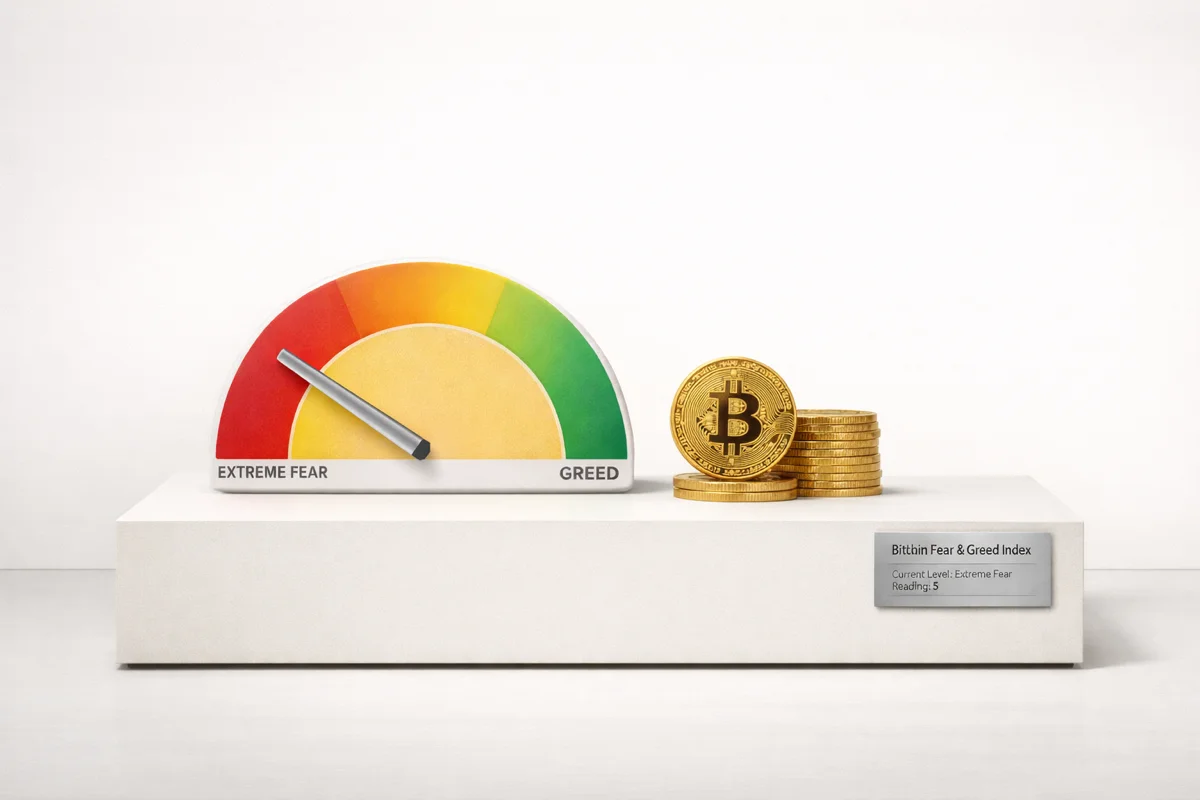
Whale wallets holding more than 1,000 BTC have accumulated approximately 270,000 BTC over the past 30 days — their largest net purchase in over 13 years, representing roughly $18.7 billion in value. This accumulation occurred during a period of extreme fear, with the Fear & Greed Index dropping to the 10-14 range and Bitcoin's RSI hitting 27, an oversold reading rarely seen outside of capitulation events.
Exchange reserves have declined to 6-year lows of approximately 2.31 million BTC, with only 5.88% of total Bitcoin supply sitting on exchanges — levels not seen since December 2017. In the most recent week alone, over 47,000 BTC valued at approximately $3.2 billion departed centralized exchanges, indicating a continued preference for cold storage and self-custody.
One particularly notable withdrawal saw 13,500 BTC leave Binance in a single event at the $66,000 price level, suggesting strategic whale accumulation during the dip. The Coinbase Premium Index — which measures the price difference between Coinbase (dominated by U.S. institutional buyers) and offshore exchanges — recently returned to positive territory after an extended period of negative readings, suggesting recovering U.S.-based demand.
Cautionary Signals: Whale Selling and Demand Weakness
The on-chain picture is not uniformly bullish. Several metrics suggest the recovery may face resistance.
The exchange whale ratio has climbed to 0.64, meaning that 64% of all Bitcoin exchange inflows now come from the top 10 deposits by volume. This is the highest reading in years and indicates that whales are not only accumulating — they are also driving selling activity at higher price levels. Between February 23 and March 3, whales accumulated heavily, but the moment Bitcoin reached $74,000, key stakeholders began taking profits.
Analysts caution that the moderate improvements in selling pressure and demand should not be confused with lasting momentum. For Bitcoin to maintain a durable rally above $73,000, "a stronger and clearer increase in demand will be necessary." The geopolitical tensions that triggered the original sell-off remain unresolved, and the macro backdrop continues to create uncertainty for risk assets.
Short-Covering Rally vs Genuine Recovery: The Verdict
The evidence points to a market that is primarily short-covering driven in the near term, but with structurally bullish accumulation occurring underneath the surface.
The short-covering interpretation is supported by the derivatives data: negative funding rates, rising Open Interest in short positions, and the mechanical nature of the price recovery through forced liquidations. Market maker commentary explicitly attributes the move to positioning rather than conviction.
The structural bull case rests on the on-chain accumulation data: the largest whale purchases in over a decade, exchange reserves at multi-year lows, and the return of U.S. institutional buying signaled by the Coinbase Premium and ETF inflows. These are not the hallmarks of a market preparing for further capitulation — they suggest that large, patient capital is positioning for the next major move higher.
The resolution likely depends on what happens after the short-covering dynamics exhaust. If fresh buying demand enters the market — sustained ETF inflows, continued exchange outflows, and funding rate normalization into positive territory — the short-covering rally could transition into a genuine recovery. If the buying dries up and whales continue distributing at higher levels, the $73,000 level may prove to be a local top rather than a launchpad.
Conclusion
Bitcoin's recovery to $73,000 represents a textbook short-covering rally amplified by extreme bearish positioning. The underlying on-chain data — record whale accumulation, depleted exchange reserves, and returning U.S. institutional demand — provides structural support for a potential transition to genuine recovery. However, whale profit-taking above $74,000 and the need for sustained fresh demand create a clear hurdle that must be overcome for the rally to extend.
Sources
- The $73,000 Test: Crowded Shorts And Negative Funding Fueled Bitcoin's 15% Recovery
- Bitcoin breaks $73,000 but traders warn of another bull trap
- Bitcoin RSI Hits 27: Whales Accumulate 270K BTC in Extreme Fear
- Bitfinex Signals Bullish Turn: Over 47,000 BTC Exit Exchanges
- Bitcoin Climbs Past $73,000 as On-Chain Data Tells a Cautious Story
- The Quiet Accumulation: 13,500 Bitcoin Leaving Binance
- Bitcoin rebounds toward $70,000 as ETFs pull in $1.45 billion