Bitcoin Dropped to $70K After FOMC — Is the $62K Support the Next Stop?
Bitcoin dropped 8.2% after the Fed held rates at 3.5-3.75%. Five red monthly closes, $512M in liquidations, and a 200-DMA at $62K — here is what to watch next.

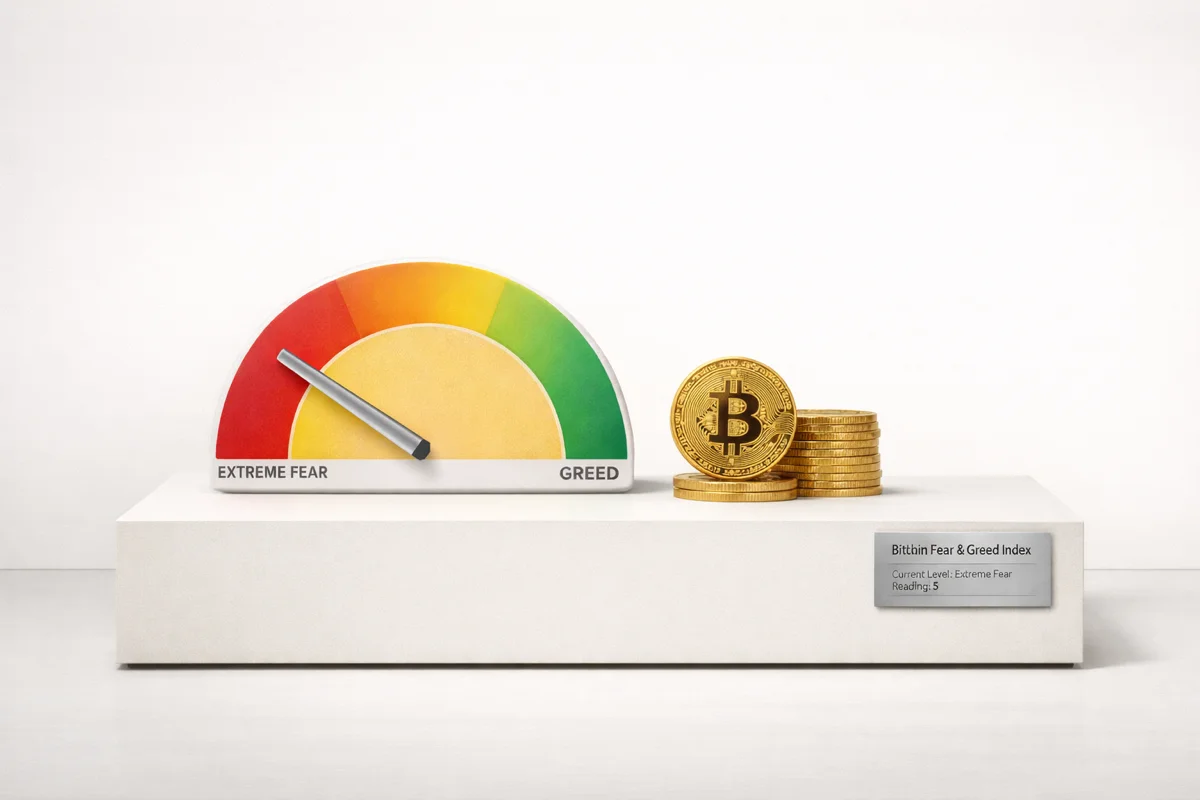
Bitcoin spent weeks building expectations around a potential Federal Reserve pivot. The March 18 FOMC meeting delivered a clear answer: not yet. Within hours of the decision, BTC fell from $76,500 to $70,200 — an 8.2% drop that triggered over $312 million in leveraged long liquidations and sent the Fear & Greed Index from Greed territory (58) to Fear (32).
The immediate damage is visible. What matters now is what comes next. With five consecutive red monthly closes behind it and the $62,000 level sitting directly below as the next major technical and on-chain support, the question is whether this was a routine leverage flush or the beginning of a deeper correction.
The FOMC Decision and Why Markets Were Wrong
The Federal Open Market Committee voted unanimously on March 18 to hold the federal funds rate at the 3.5–3.75% target range. The statement cited "persistent elevated inflation" and continued labor market resilience. Fed Chair's press conference offered no concrete forward guidance on timing of future cuts.
Markets were not fully positioned for this outcome. Heading into the meeting, the CME FedWatch Tool showed a 34% implied probability of a 25 basis point cut — meaning roughly one-third of the market had priced in some degree of relief. That expectation was crushed.
The revised dot plot compounded the disappointment. The median projection for 2026 now shows just one rate cut, down from two cuts projected in December 2025. Real 10-year Treasury yields rose 12 basis points on the day. The Dollar Index (DXY) gained 0.7%. Both are headwinds for risk assets including Bitcoin.
This is textbook sell-the-news mechanics. Bitcoin had rallied steadily through February and early March on expectations of a dovish pivot. When the catalyst failed to materialize, accumulated long positioning became fuel for the drop. Buyers who bought the anticipation sold the fact — or were liquidated.
The $70K Drop in Numbers: Liquidations and Market Structure
The price action was sharp. BTC moved from approximately $76,500 to $70,200 in under four hours following the FOMC statement. Given the leverage concentration in derivatives markets, the speed of the move was not surprising — it was mechanical.
Total crypto liquidations across all assets reached $512 million in the 24 hours following the decision. Bitcoin longs accounted for approximately $312 million — 61% of the total. Altcoins saw heavier percentage losses: Ethereum fell 12%, Solana dropped 14%, and Avalanche lost 16%.
Bitcoin futures open interest fell from $38 billion to $31 billion over the same period — a $7 billion contraction. This forced deleveraging is painful in the short term but structurally constructive: a market with less embedded leverage is less vulnerable to cascade liquidations on subsequent downside moves.
The Fear & Greed Index moving from 58 to 32 in twelve hours reflects a genuine sentiment shift. Historically, readings near 30 have correlated with accumulation windows — but they do not guarantee immediate reversals, particularly when macro headwinds persist.
Five Red Monthly Closes: Warning Sign or Capitulation Setup?
Bitcoin has now registered five consecutive red monthly closes: November 2025 through March 2026. This is a statistically rare streak that demands historical context before drawing conclusions.
The previous instance of five or more consecutive red monthly closes occurred during June through October 2022 — the final phase of the 2022 bear market. That streak terminated near the cycle bottom at approximately $15,500. The pattern, historically, has coincided with market bottoms rather than midpoints of downtrends. That reading argues against panic.
The current drawdown stands at approximately 35% from Bitcoin's all-time high of roughly $108,000 reached in January 2025. By Bitcoin's historical standards, 35% is a significant but not extreme correction. The 2022 bear market reached 80%+ drawdown. The 2018 cycle saw 84%. A 35% retracement is painful but within the historical range of cyclical corrections.
On-chain data adds a critical near-term signal. The realized price for short-term holders — those who acquired BTC within the past 155 days — currently sits at approximately $68,400, very close to the current spot price of $70,200. This means recent buyers are near breakeven. Historically, when spot falls below the STH realized price and holds there, it triggers capitulation-style selling from that cohort. Bitcoin is at that threshold.
The more important structural signal: long-term holders have not capitulated. LTH supply is not flowing to exchanges in distress quantities. This is a meaningful difference from 2022, when both STH and LTH cohorts were in deep loss together. LTH stability places an implicit floor on how severe this drawdown can become.
Why $62K Is the Level to Watch
Multiple independent frameworks converge on $62,000 as the next critical support level.
200-day moving average. The 200-DMA currently sits near $62,000. This is the most widely referenced long-term trend indicator across both crypto and traditional markets. A sustained break below it triggers risk-off responses from algorithmic strategies and institutional participants who use it as a portfolio signal.
Previous consolidation base. $62,000 was the consolidation zone during August and September 2025 — the base from which Bitcoin launched its final leg to the January 2025 ATH. In technical analysis, former breakout levels act as support on the way down. This gives $62K structural significance beyond the moving average alone.
UTXO cost basis cluster. On-chain UTXO analysis places the largest concentration of unmoved coins in the $60,000–$65,000 range. These holders acquired BTC at those levels and represent natural demand: they are unlikely to sell at or below their own cost basis without significant external stress.
The weekly RSI is currently 42. Oversold on the weekly timeframe is typically below 30. There is measurable room for further downside before technical oscillators argue for a bounce.
If $70K does not hold, $62K is the next level with a credible structural argument behind it. Below $62K, the next meaningful support zone is $55,000–$57,000 — the 2024 accumulation range before the ETF-driven rally. Reaching that level would require a significant worsening of macro conditions.
June 2024 Flashback: How Similar Is This Setup?
The structural parallels between June 2024 and the current drawdown are worth examining directly, while noting where they break down.
In June 2024, Bitcoin fell from approximately $72,000 to $57,000 — a 21% decline — over roughly three weeks. The trigger was a sell-the-news event: months of anticipatory buying around spot ETF dynamics unwound rapidly once the catalyst was digested. The mechanics are near-identical to March 2026, where months of FOMC cut expectations met the reality of a hold decision.
In 2024, the market bottom took approximately seven weeks to form. Full recovery to new all-time highs required four months. If that timeline template applies, the March 2026 correction would not fully resolve before May or June 2026 at the earliest.
There are real differences, however. The macro backdrop is more challenging now. Base rates at 3.5–3.75% represent a genuine cost of capital — one that competed for institutional risk allocation throughout 2025 and continues to do so. During the 2024 recovery, base rates were lower and falling. That distinction affects both the speed and ceiling of any potential recovery.
One similarity that held in 2024 and appears intact in 2026: long-term holder behavior. In both periods, LTH supply showed minimal capitulation and continued net accumulation. This is the structural bullish argument. But macro conditions set the pace.
What Comes Next: Two Scenarios
Bull case — consolidation holds: Bitcoin stabilizes in the $68K–$72K range over two to four weeks. The leverage flush has already removed the mechanical fuel for further cascade selling. A soft April CPI print (April 10) or any signal from the Fed suggesting openness to future cuts provides a recovery catalyst. BTC reclaims $76K within six to eight weeks.
Bear case — $62K gets tested: Macro data stays unfavorable. Inflation remains sticky. The Fed signals no cuts before Q4 at the earliest. DXY continues strengthening post-FOMC. BTC drifts lower, breaks $68K, and tests $62K within two to four weeks. A 200-DMA break triggers algorithm-driven selling and opens the path to $55K–$57K.
The critical on-chain signal to monitor is the STH realized price at $68,400. If spot price breaks below that level and holds there, capitulation from recent buyers becomes likely — the mechanical accelerant for the bear case.
Key upcoming catalysts in order of importance: April CPI (April 10), next FOMC meeting (May 5), weekly spot ETF flow data. Sustained ETF outflows would be a significant deterioration signal; resumed inflows would support a recovery.
The practical risk management conclusion: initiating new long exposure before either $62K demonstrably holds or $70K is reclaimed with meaningful volume is premature. The leverage flush is complete. Price discovery is not.
Conclusion
The FOMC delivered a reality check, not a catastrophe. An 8% drop following a sell-the-news event after months of expectation-driven buying is how this market works, not evidence of structural failure.
The real challenges are the ones that precede and follow FOMC day: five red monthly closes, a 35% drawdown from ATH, and a macro environment where rates remain at 3.5–3.75% with no clear timeline for relief. The $62,000 level — the convergence of the 200-DMA, the previous consolidation base, and the largest UTXO cost basis cluster — is the line that determines whether this is a final shakeout or a deepening correction.
Historical patterns, most directly the June 2024 analog, suggest recovery is plausible given intact LTH behavior. The depth and timing of that recovery depend on macro variables Bitcoin cannot influence.
Watch $62K. Everything else is noise until that level either holds or breaks.
Sources
- Federal Reserve — March 2026 FOMC Statement
- CoinDesk — Bitcoin Dumps 8% as FOMC Delivers No-Cut Decision
- Glassnode Insights — BTC Monthly Close Analysis
- CryptoQuant — Bitcoin $62K Support Analysis
- Blockworks — June 2024 vs March 2026 Pattern Comparison
- CoinMarketCap — Crypto Liquidations Top $500M
- Bloomberg — Fed Rate Path 2026
- TradingView — BTC Technical Analysis Post-FOMC